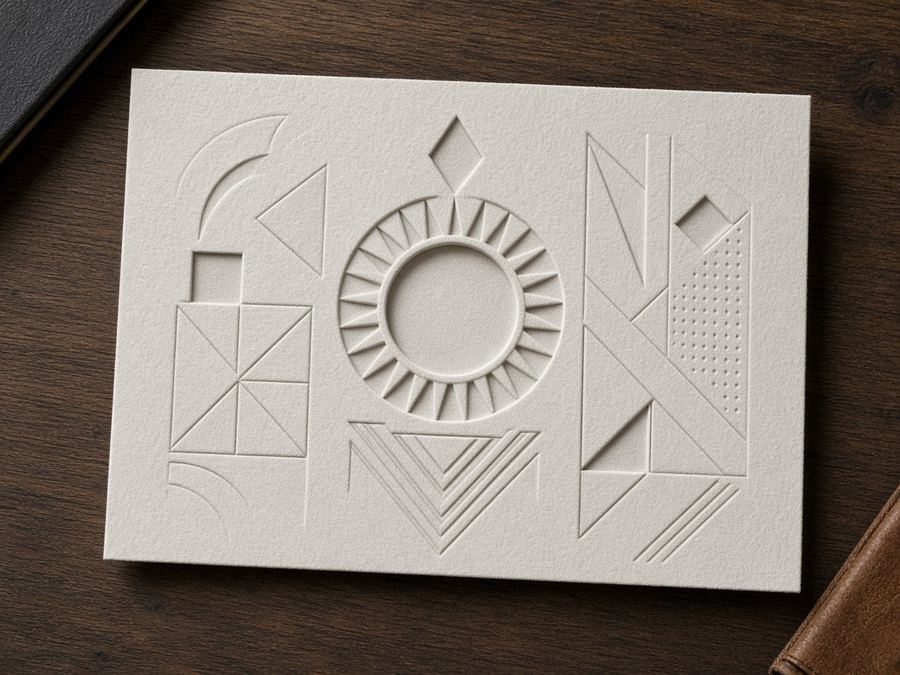
Cedar Card
A cotton business card with deep deboss and quiet geometric ornament.
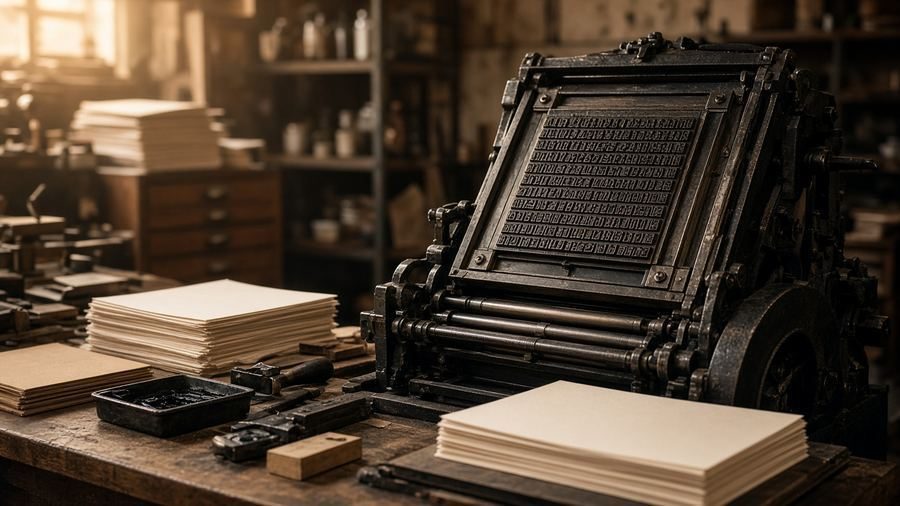
Letterpress studio
Platen press, cotton stock, and careful make-ready—each job leaves with impression notes, not a digital flat file.
Numbered studio verbs from first measure to handoff.
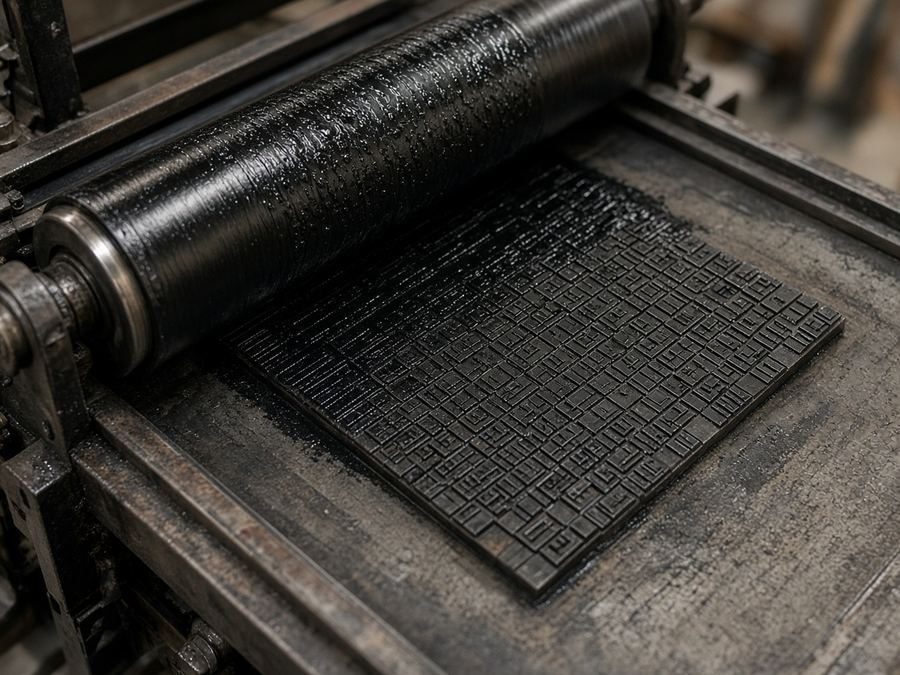
We lock wording, stock, and ink color before the first make-ready.
Type and plates are composed; packing is tuned for even impression.
Ink is rolled thin so coverage stays even without filling the cut.
Sheets run through the platen with drying racks between passes.
Edges are trimmed and counted; spoils are logged honestly.
Recent work from the bench — each piece is titled so you can reference it when you book.
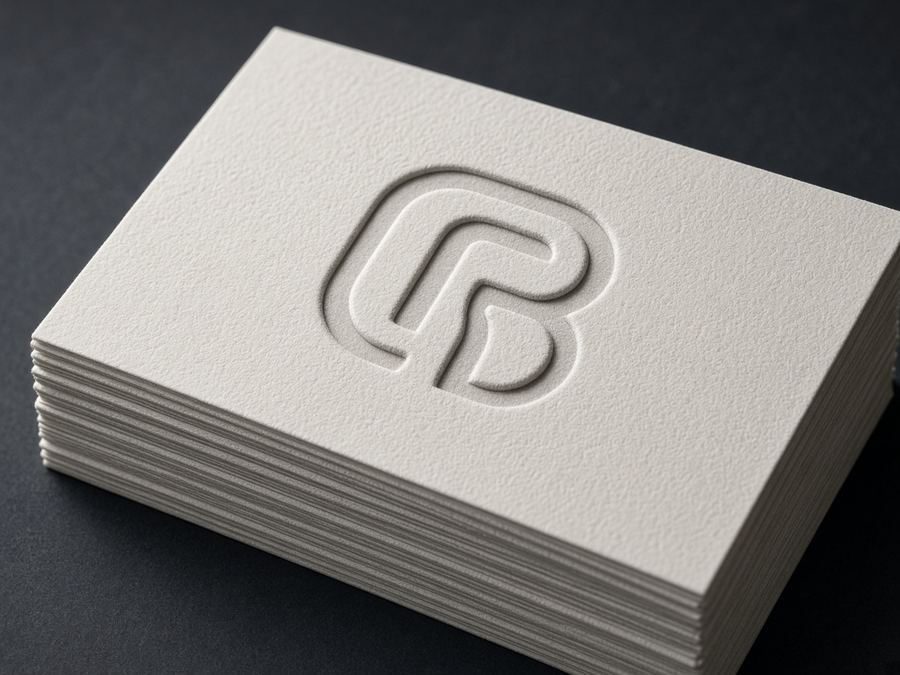
A cotton business card with deep deboss and quiet geometric ornament.
A limited poster run in navy and ochre with clean margins.
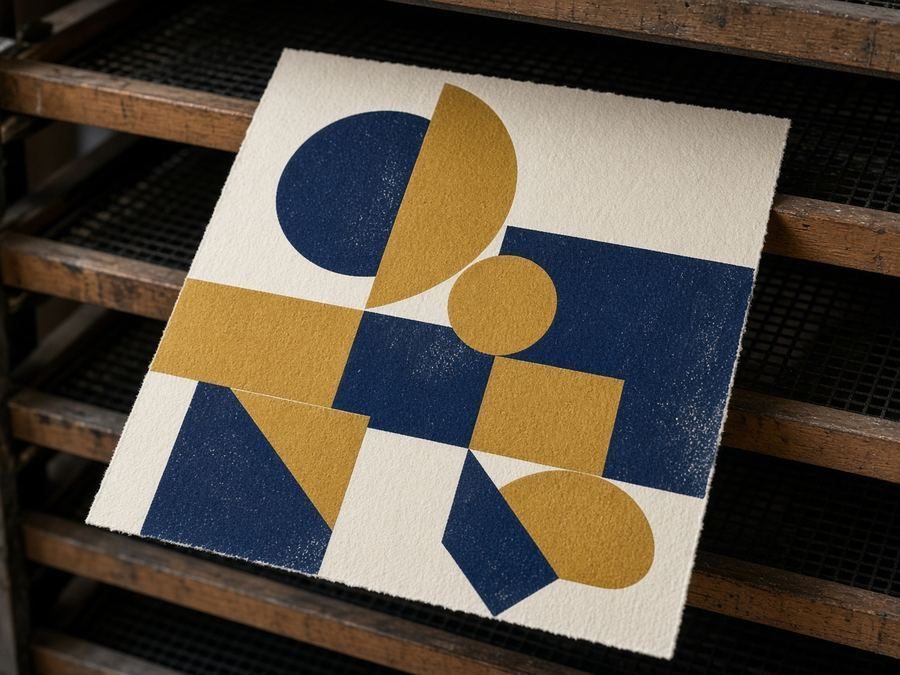
Invitation sheets and liners pressed for a small supper.
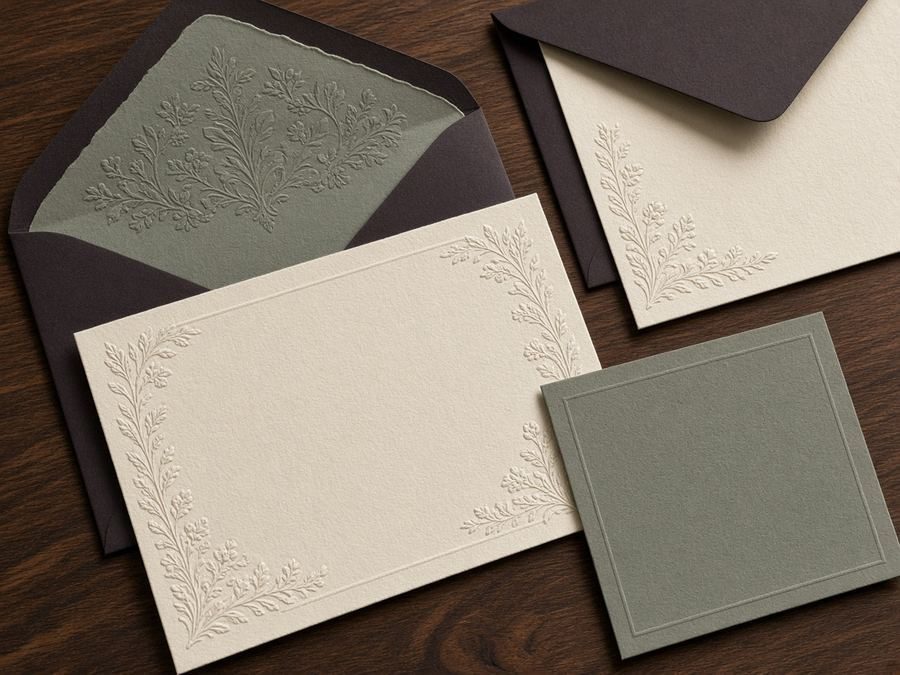
Outer envelopes with a soft corner impression for a suite.
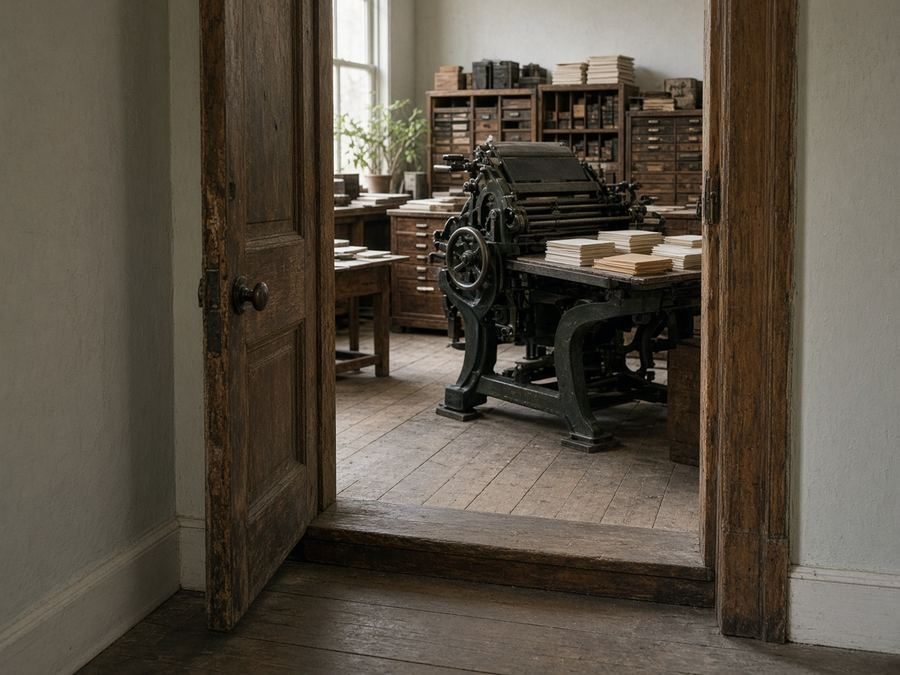
Appointments keep the workspace clear. Walk-ins are rare; send a request and we confirm a slot by email.
Zone 61, Street 310, Building 22, Doha
Mon–Sat 10:00–18:00
Same-week openings are confirmed by email after you send the booking form.

“The cards arrived with a bite you can feel, and the ink sat clean on the cotton stock.”
— Return client
Most business card jobs need 10–14 days after stock and ink are locked.
We aim close with mixing; exact brand matches are quoted case by case.
Yes when stock allows; heavy impression on both sides needs extra drying.
Fifty sheets for cards; posters start at twenty-five.
Clients often arrive with a PDF and a question about how deep the impression should feel. We answer with stock samples on the bench first, then a clear day count for make-ready.
The press keeps scrap sheets so you can feel cotton bite before you commit a full run. That single check settles packing debates faster than a screen mockup.
We write down which ink mix you approved and which rush double-sided prints we refused so the finished job matches the honest plan.
Appointments are paced so drying racks stay clear between passes. If a slot is full, we offer the next open window rather than stacking wet sheets.
Care notes travel with every handoff: stacking tips, humidity caution, and when to return if a corner needs a careful re-trim.
Seasonal humidity shifts how cotton stock takes ink. Bring timing notes for events; rush windows alone can push ink choices that need longer rest.
We do not promise awards or viral finishes. We promise measured make-ready, named steps, and a reply when your message lands in the booking form.
If you are gifting a suite, tell us the handoff date early. Wrap boards and count cards are prepared after the last trim, not before ink is set.